Where a kitchen printer actually fails
A receipt printer is a decent archive of a single line and a poor work list. On a busy pass the slips pile up. A new ticket covers the previous one. An allergy sits in small type at the bottom, exactly where grease darkens the paper. Someone spikes the ticket and a colleague pulls it because the table looks as if it has already left. There is no status. There is only paper that is either hanging there or not, and that is a weak record of the kitchen.
The second failure is the change. An extra sauce, a course that should wait, a line the guest cancels: on paper that becomes a second slip you have to keep beside the first. Lose the first and the kitchen still cooks the original dish. The till then knows something the pass does not. You discover the gap when the plate comes back, or when stock no longer matches what was paid. Paper has a quiet cost as well. Every reprint is a dish that may already be on the stove. In a small kitchen someone prints a second ticket just in case, and two cooks run the same number. On a screen the line exists once. A change replaces the text instead of laying a second slip beside the first. It feels minor until a Saturday produces three doubled plates you gave away. Keep the printer for the guest receipt. It is a poor place to store the truth of the service.
What the pass should see on a screen
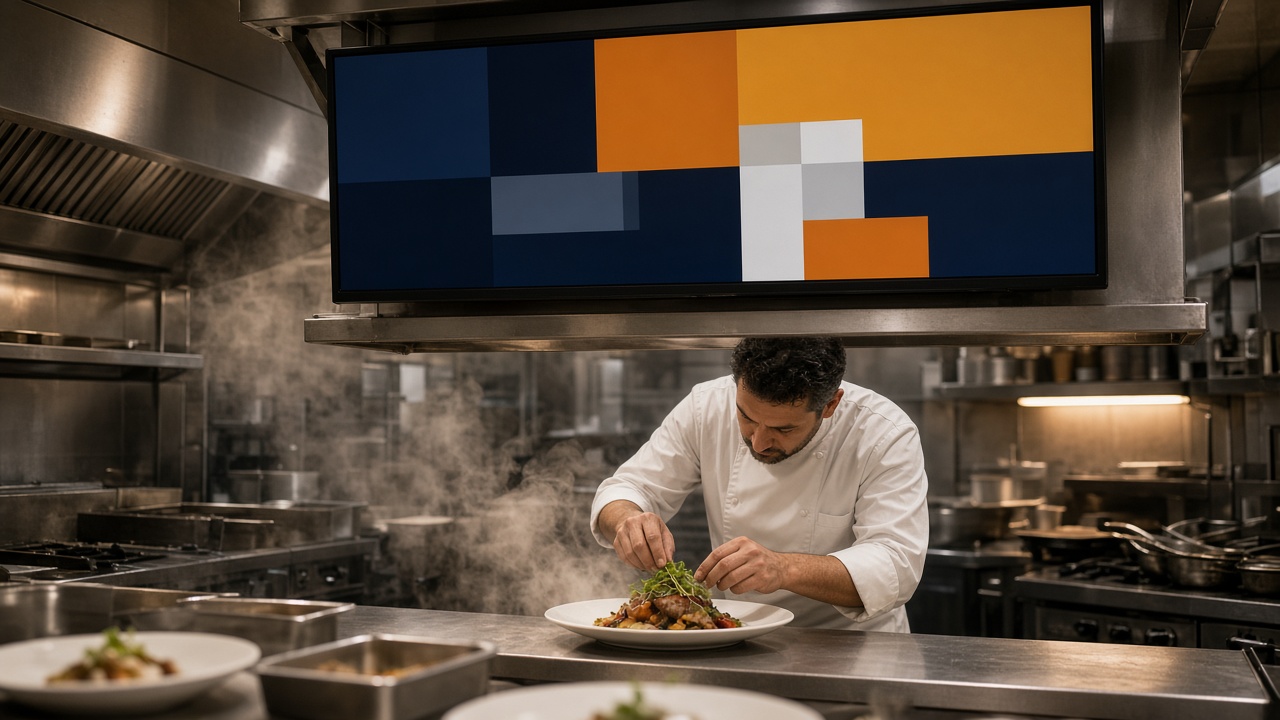
A kitchen display shows the open lines and the status: in progress or ready. The brigade works a list instead of a spike. A dish that is done does not vanish because the wrong slip went in the bin. Whoever runs the pass can see what is still open without reshuffling paper. Courses can be released so the starter is not on the stove beside the main only because both were printed on one ticket.
For a restaurant that is the difference between a kitchen that follows the room and a kitchen that follows paper. For a snackbar it is the difference between a queue that shouts at the fryer and a screen that still shows the sequence when a new cook steps in. The display belongs with the POS, not as a separate app you refill every morning. In this system the kitchen screen sits in the same environment as the desktop POS, on the same products. Readability is part of that status. A modifier, no onion, sauce on the side, an allergy the guest actually named, has to be as readable as the dish itself. On a thermal slip it sinks into a line you cannot see from the other side of the pass. The person calling the plates should not have to guess. Put the screen where that person stands, not on a shelf only the wash-up visits. A display nobody looks at is a printer without paper and without the benefit.
Getting kiosk and website orders onto that screen
A printer becomes impossible once orders no longer all start at the till. An ordering kiosk in the room and an ordering website at home create tickets at moments when nobody is standing at the counter pressing print. If those orders arrive as another slip, another email or another tablet, the kitchen has two queues. The guest at the hatch waits for something that has been sitting in an inbox, or the driver leaves with a bag the fryer has not seen.
Orders from the till, the kiosk and the ordering website should land on the same kitchen display. Origin can stay visible. The work list is one list. For delivery and pickup that is what makes the counter and the online stream runnable at the same time. How that link should look from the POS side is in the article on connecting the POS to a kiosk and an ordering website. Keep a printer if you still want a guest receipt. As the only truth in the kitchen, paper is too thin. Agree which station owns which part of the work. Fryer, grill and cold side can follow the same list for their own courses, as long as the order is not cut into three printouts nobody can reassemble. The guest sees one bill. The kitchen may divide the work, but the origin stays one order. A separate kitchen app beside the till often drifts: ready then exists somewhere the POS does not know, and the counter keeps asking whether the plate can go.