What the floor plan is actually for
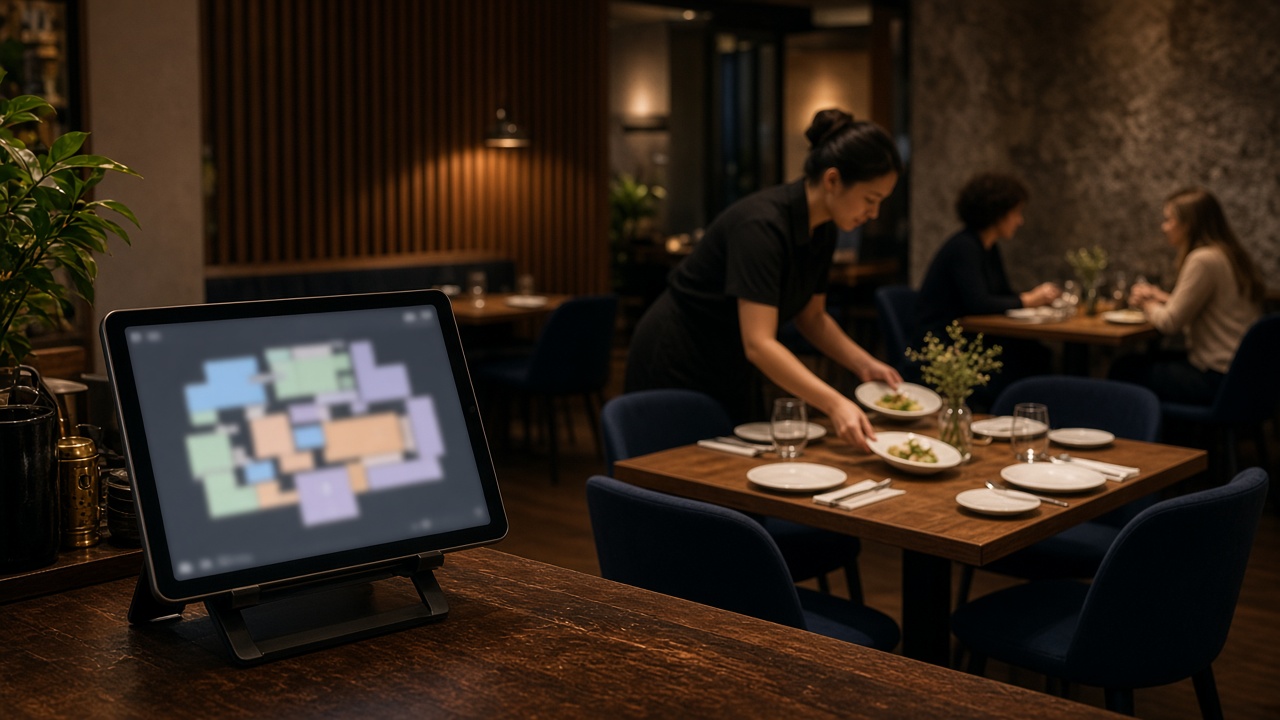
A table layout is the room the way the team walks it, not a list of table names buried in a menu. On the desktop POS you see which table is open, which is occupied and which bill is attached. A server who steps in halfway through the evening does not have to ask what twelve had. The screen answers. That removes mistakes when the room is full and nobody’s memory still is.
The layout is also the link to the kitchen. A course you fire from the table should land on the kitchen display as part of that table, not as a stray ticket with no origin. Move the guests and the open bill moves with them. Otherwise table nine pays for what table four ate, and the pass hunts a plate that already left. For a restaurant that is the point of table management: one check, one place, one status. Name the tables the way the team already talks about them, not as an abstract grid only the installer understands. A terrace chair pulled into the sun has to be on the plan that same evening, or a shadow bill appears beside the real one. And agree when a table is empty: not when the guests stand up, but when the last part of the bill is paid and the check is closed.
In a hotel the same pattern covers the bar, the lounge and room service. The room is the table: the order stays on the room number until it is paid, and the kitchen sees that number on the screen. Without the link, room service is a note in the lift and a charge the front desk cannot explain in the morning.
How to split without breaking the VAT
Split by line when you can. The wine stays with the person who ordered the wine. A shared starter can be divided. The mains go to the guest who ate them. The POS includes splitting as part of checkout so you are not inventing a figure outside the system. Each part of the bill keeps the products, the price and the VAT of those lines. The guest sees a receipt that matches the table.
An even split, "just divide it by four", is tempting and shaky once food and alcohol are mixed. In Dutch hospitality, food and non-alcoholic drinks normally sit on the reduced VAT rate and alcohol on the standard rate. Divide only the grand total and you smear those rates across people who did not consume them in that proportion, and the part-receipts are hard to defend. Move the lines. An equal split of the lines themselves is explainable only when the table truly shared the same mix. Set the rates in the till from the tax administration’s rules, not from an average.
A correction on a split bill should leave a trace. A line you move back, or a dish the guest declines after all, must not vanish quietly. Otherwise takings no longer match what the kitchen sent. How that day should look in the records is in fiscal records from the POS. Splitting is a service to the guest. It is not a way to lose turnover.
Using the same tables away from the bar
The floor plan is thin if it only exists behind the bar. On the mobile POS you open the same table, add a round and take payment where the guest is sitting. The desktop sees the change because it is one system, not a second till with its own truth. A colleague at the bar can pour the wine while you are still on the floor with the dessert card.
After a split, the guest usually wants to tap a card at the table, not join a queue at the terminal. That part of the bill is on the device in your hand. The other parts stay on the table until they are paid too. Nobody has to remember a tab number. Do not finish the night with open checks because the handset was back in a drawer while the guests were already standing up.
Not every venue needs this. A snackbar that cashes at the hatch does not need a plan of twelve seats. There the bill is the order itself, and splitting rarely comes up. Use table management where guests stay and the check grows. Do not use it to make a counter service more complicated than the queue can bear.